
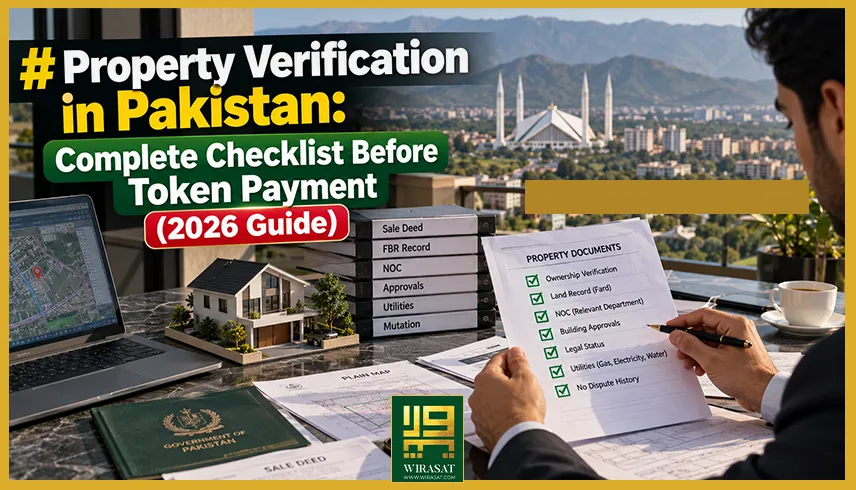
Imagine you have found the ideal home. It’s in a great location, the price looks fair, and the seller tells you there’s another buyer interested. You are under pressure to pay the token now; otherwise, you will lose the deal.
But before you transfer any money, ask one important question: “Do I have proof that this exact property is clear, that the seller owns it, and that it can be transferred in my name?”
The most common mistake many property buyers make is paying token money before proper verification.
Even if the property appears good, there could be underlying issues. It may have unpaid dues, ownership issues, mortgage charges, transfer restrictions, approval issues, discrepancies between the documents and the actual property. Even if a housing society is approved, each plot, house, apartment, or commercial unit must be checked separately.
Hence, Property Verification in Pakistan should be done before the token payment. Spending a few days on proper due diligence can help you uncover most problems before you invest.
Why Property Verification Before Token Payment Is Important
Typically, when someone wants to buy a home, they are usually asked to pay to indicate their intent to purchase the property. But many buyers choose to pay a token amount without completing due diligence.
A dealer may say:
- Another buyer is interested.
- Please pay the token now.
- Society is approved.
- The owner is very eager to sell.
These statements are not a substitute for verification.
Property verification before token payment is done to ensure that the exact property is legally clear and can be transferred to the buyer. The process should cover ownership, approval status, transferability, dues, mortgage status and other pertinent records.
The basic rule of a safe transaction is simple: check before you pay.
Buyers must also check the plot or unit itself, not just the housing society’s general approval status. The property due diligence process in Pakistan should match the type of property.
1. Verify the Identity and Authority of the Seller
The first step in real estate verification in Pakistan is to validate the seller. Remember that the person showing you the property may not be the actual owner.
Ask for and verify:
- Seller’s CNIC
- Ownership documents
- Allotment letter
- Transfer letter
- Registry documents
- Society records
- Authority to sell
- Power of attorney (when applicable)
The seller’s name should match the name on the ownership record held by the society, authority, or land record office. When someone is selling real estate on behalf of another, check their authorization thoroughly. Performing seller verification is a key element of property due diligence, even a legally clear property becomes problematic if the seller is not authorised to complete the sale.
2. Check the Exact Property
The most common mistake made by buyers is checking whether a housing society is approved and then assuming every plot is safe. Check the following details of the exact property:
- Plot number
- Block
- Street
- Size
- Category (residential/commercial)
- Location
- Possession status
- Transferability
A society may be approved, but a specific plot may fall in an unclear extension, be affected by a revised plan, be mortgaged, or have another problem. Always focus on the exact property you want to buy.
3. Check the Relevant Authority
Each area and type of property may fall under different authorities. Determine the jurisdiction of the property before purchase.
Verification can be done through:
- Development authorities
- Housing society offices
- Land record authorities
- Cantonment authorities
- Cooperative housing societies
- Private developers
One of the most important steps on a proper property-buying checklist in Pakistan is to verify with the correct authority.
4. Look for Mortgage or Bank Charges
A property can be under a bank mortgage, society mortgage, authority charge, or loan. Before paying for anything, check whether there are any such obligations.
If there is a mortgage, then ask:
- Has the mortgage been officially released?
- Is the property transferable?
- Is there any unpaid loan?
- Who is going to repay the loan?
- At what time will the original documents be released?
Don’t rely on the seller’s word. If the property is mortgaged, it must be clear how the outstanding amount will be paid and how the property will become transferable. Mortgage verification is a vital component of property due diligence in Pakistan.
5. Determine whether the property can be transferred
Before paying token money, establish that the property can legally be transferred to your name. Some plots or units may still have transfer restrictions, unpaid installments, or outstanding development charges that must be cleared before transfer.
If you are buying a property file, it is especially important to understand that a file, a balloted plot, a plot with possession, and a transferable plot each have a different legal status.
The buyer should verify with the appropriate housing society, housing authority or land record office that the precise property can be transferred without any restrictions. In Pakistan, Transferability Verification is a critical step in property verification, and it can help prevent future legal and financial issues for buyers.
6. Check All Outstanding Dues
Request a complete list of dues before token payment.
The asking price of a cheap property might seem appealing, but there can be hidden fees that drive up the total cost. Potential outstanding payments can include, but are not limited to:
- Installments
- Development charges
- Transfer fees
- Utility charges
- Maintenance charges
- Taxes
- Penalties
Get written confirmation of who will pay any outstanding dues, the buyer or the seller, and include it in the token receipt or bayana agreement
7. Understand Property Token Payment Rules
Property token payment rules should benefit both the buyer and the seller. Never pay a token blindly. Before paying token money, get a written receipt that includes:
- Buyer name
- Seller name
- CNIC details
- Exact property details
- Total agreed price
- Token amount
- Payment method
- Date of agreement
- Verification period
- Transfer deadline
- Refund conditions
The property description should be detailed enough that anyone can tell exactly what is being bought. If a dispute arises, a vague token receipt can cause serious problems.
8. Make the Token Refundable if Verification Fails
A refundable token clause is one of the most significant clauses for buyers. The token receipt should state that the payment is conditional on satisfactory verification. The agreement can include conditions related to:
- Ownership verification
- Mortgage verification
- Transferability
- Approval status
- Outstanding dues
- Legal disputes
Important: If the property does not meet the agreed verification conditions, the buyer must be entitled to a full refund, and the agreement should state this clearly in writing.
Types of 1 Kanal House Bahria Phase 4 Rawalpindi
Proper documentation of token money is always necessary. A token receipt should include of the following information:
- Buyer’s and seller’s information
- All property details
- Total price
- Amount of the token
- How the payment is to be made
- Verification period
- Refund conditions
The seller should also confirm in writing that the property is free from mortgage, legal disputes, unpaid debts, or third-party claims.
Major Red Flags Before Token Payment
Not every red flag means a property is fraudulent, but it does mean you must verify before paying any money. If you see any of the following, stop and investigate further:
- Pressure to pay immediately
- The seller refuses verification
- Incomplete property documents
- Unverified ownership
- The plot appears only on an unofficial map
- Unclear block or extension status
- A price far below market value
- The seller lacks authority to sell
- Large unpaid dues
- A transfer through an unclear power of attorney
- Unapproved construction
- The seller insists on full payment in cash without documentation
Conclusion
When you’re making a big investment, it’s better to take your time and ensure that you’re making a worthwhile choice. Buyers must remember: don’t check only the housing society. Verify the exact property.
This guide has covered the documents and records to check before buying, how verification works before a token payment, and what a safe token or bayana agreement should include.
Take time to do proper property due diligence in Pakistan before paying token money. A genuine owner of a legally clear property should have no problem with reasonable verification.
A great deal is not just a great house at a great price. A good deal is a property that is legally cleared, well-documented and safely transferable.
Frequently Asked Questions (FAQs)
Property verification involves checking ownership, legal status, approvals, transferability, dues, mortgage status, and other important records before purchasing a property.
No. Always check the actual plot or unit, because society approval does not guarantee that every property is legally clear or transferable.
Yes. Before buying, confirm whether the property is mortgaged to a bank, society, or authority, and whether it has been officially released for transfer.
Usually, documented banking channels are safer because they create a record of the payment. The method of payment should be agreed upon and documented.


Comments are closed