
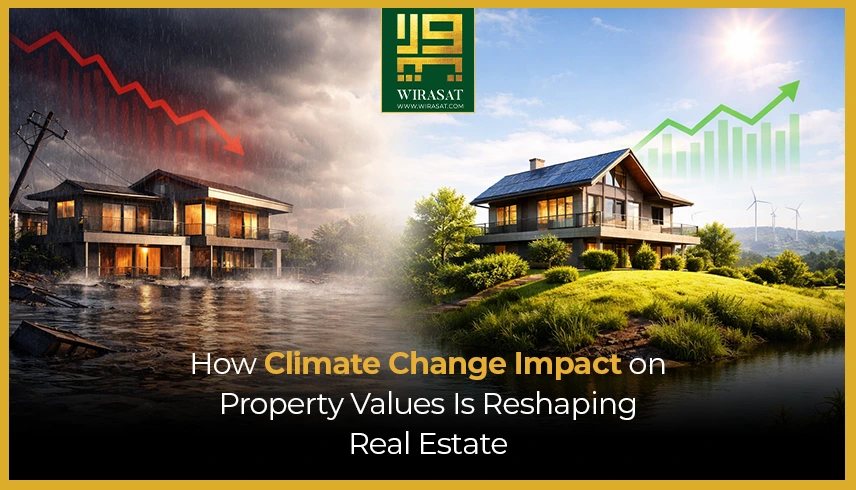
Climate change is not a far-off problem, it is changing the economy and real estate. Increasing temperatures, changing weather, flooding, and changing trends transform the way investors, developers and buyers value property. The Climate change impact on property values
effects are currently influencing prices, insurance fees, planning and long-term investment decisions.
Currently, in Pakistan, these climatic hazards are having an impact on the property markets, particularly in the flood-prone zones and heat-stricken regions. It is important to know the impact of climate on real estate by investors, policymakers and people who own houses.
Understand the Climate Change Effect on Real Estate
The effect of climate change on property values is that it raises environmental risks, such as floods, heatwaves, sea-level rise, and storms. These dangers change demand, price and long-term returns. Predictable markets flourish, and climate instability brings in the element of uncertainty.
Houses in risk-prone areas are usually less demanded, cost more to maintain, and have fewer financing opportunities. On the other hand, neighbourhoods developed to resist climate change and have a sustainable infrastructure become valued and appealing to long-term investors.
Impact of Climate Change on Property Values
This effect can be attributed to several main processes:
Physical Risk
Floods, storms, earthquakes, and heat are physical dangers that lower the appeal of a property. Regular calamities destroy buildings, increase repair expenses and loss of trust in buyers. The high-risk properties have a lower value and slow growth, and thus are not interesting to invest in over the long term.
Insurance Costs
The increased possibility of climate risk increases insurance rates, which increases ownership. High cost coverage discourages buyers and investors, particularly in areas with floods. In other places, insurers simply decline to cover it, making financing or sale a challenge.
Regulatory Changes
Governments can use more restrictive zoning, building codes, or relocation of vulnerable regions. Such regulations may censor construction, add to the cost of compliance, or reduce the use of property. This kind of uncertainty undermines investor confidence and may reduce values and development potential.
Buyer Perception
Modern consumers are interested in sustainability and climate sustainability. Green-infrastructure properties, intelligent-designed places, and low-risk properties are more likely to be demanded. The homes in risky areas have less interest, hence low prices, and the growth of the market is slow.
With the increasing awareness, climate risk is being incorporated in the process of property valuation.
Climate Risk and Real Estate: A New Investment Metric.
Climate risk is now a major metric to investors, just like location, infrastructure and amenities. Climate analytics is a method of predicting value by global firms. The appreciation of the high-risk property is slow in comparison with the safer properties. Investors analyse:
- Flood history
- Heat exposure
- Water scarcity
- Seismic risks
- Environmental degradation.
Real Estate Investment Trends and Climate Change
Capital flows are changed by climate change. Meanwhile, careful investment is made in coastal, flood-prone, and heat-strained urban centres. Investing mindfully regarding climate is no longer an option, but rather a strategic nature.
Investors transfer money to:
- Sustainable planning of smart cities.
- Greenhouses and environmentally friendly buildings.
- Climate or high altitude safe areas.
- Real estates which have renewable energy.
Climate-Induced Property Devaluation
The devaluation caused by the climate is already manifested all over the world. Flood-prone and extra-heated homes are sold at a lower price compared to other properties in safe locations.
Recurring disasters may cause permanent migration, which decreases the demand and cuts the prices. There is a shift to long-term climate risk embedded in the valuation models in the markets.
Effect of Climate Change on Real Estate in Pakistan
The effects are more apparent with every passing year due to Pakistan’s vulnerability to the climate. Extreme flooding, heat waves, water shortage, urban flooding, and landslides are threats to property and infrastructure. The drainage, utility and housing pressures in major cities, Karachi, Lahore, Rawalpindi, and Islamabad are directly influencing the values, investor confidence and future development.
Climate Risks for Property in Pakistan
In Pakistan, there are various property climate risks, which investors should take into consideration:
1. Urban Flooding
Rapid urbanisation and poor drainage systems expose Karachi and Lahore to the risks of floods.
2. Heat Stress
Increased temperatures make living conditions less conducive, make cooling more expensive, and decrease property demand in ill-conceived urban development.
3. Water Scarcity
The water shortage in cities such as Islamabad and Karachi reduces the appeal of residential and commercial property.
4. Air Pollution
Major air pollution damages health and impacts property demand patterns.
5. Infrastructure Vulnerability
Extreme weather cannot sustain old infrastructure thus increasing property risk.
Effects on Property Values and Market Demand
Climate change is redefining the prices of properties and market demand as consumers are more inclined towards safer, sustainable, and well-planned places. Flood and heat stressed property tend to experience slow price growth or declines, whereas those areas that are resistant to climate usually experience increasing demand and growth.
The quality of infrastructure, green spaces, and resistance to disasters is a priority of investors that changes market trends and determines the value of real estate in the long-term in urban and semi-urban areas.
Smart Real Estate and Government Policies on Climate
To minimize environmental risks, governments are implementing climate-smart policies in order to facilitate sustainable development of real estates. These are more rigid building codes, zoning, flood-management, and green-building incentives.
The existence of such policies also motivates developers to use green designs and sustainable infrastructure. In the long run, the climate-wise regulations stabilize the property markets, enhance urban planning, and safeguard the property values against climate-based risks and calamities.
Future Transformation
Climate change is leading to a structural change in the real estate industry. Further property appraisals will incorporate more:
– Climate risk scores
– Sustainability ratings
– Indicators of environmental resilience.
– Infrastructure flexibility.
Early adaptive markets will be appealing to global investment, whereas weak regions will be at risk of capital flight and property price loss.
Conclusion
The effect of climate change on property prices is redefining the way real-estate markets operate all over the world. Climate change influences property values, climate risk, and real estate, and the industry is shifting to sustainability, resilience, and risk-based valuation models.
To Pakistan, an immediate concern is the climate-change effect on real estate, particularly in flood-prone regions. To safeguard their investment, investors need to consider the risks associated with the climate of property in Pakistan and how climate change will impact the value of their property.
In the future, the success of properties will depend on the sustainable development of real estate as climate pressures increase. The next era in real estate markets will be smart investors, developers, and policymakers who incorporate climate resilience in their real estate planning.