
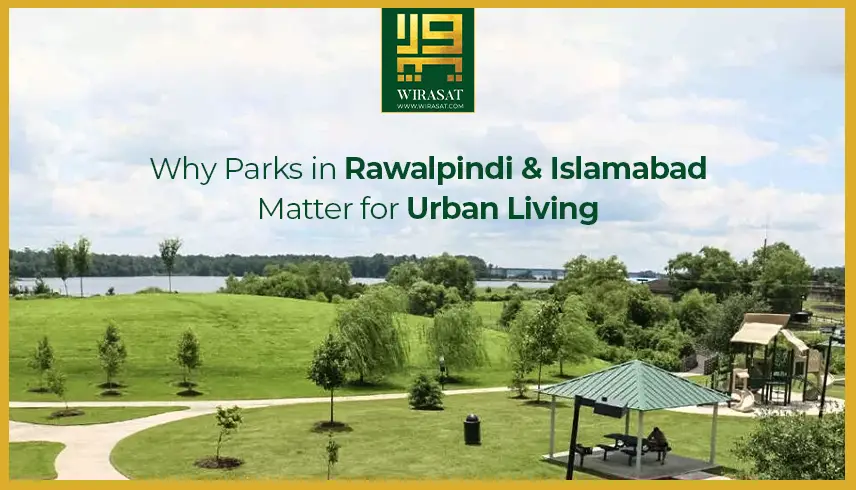
Pakistan is quickly changing in terms of urban living, particularly in metropolitan areas such as Rawalpindi and Islamabad. With the growth of cities and new housing societies, commercial centres, and infrastructure developments, the role of green spaces becomes even more significant. Rawalpindi and Islamabad parks are critical towards the improvement of life quality and environmental conditions as well as the physical and mental health of citizens.
We discuss the reasons why parks are important in urban areas, the environmental and health advantages of parks, and the reasons why a growing population of people demands more parks in Rawalpindi and Islamabad so that the three cities can develop sustainably.
Key Reasons for More Parks in Rawalpindi and Islamabad
The benefits of urban green spaces like the parks that are open to the public are not merely cosmetic. In a fast expanding metropolis such as Rawalpindi -Islamabad, there is a particular necessity. Here are some key reasons:
Health & Well‑being
Rawalpindi and Islamabad have parks where residents can walk, jog, cycle and do other physical exercises. These kinds of activities will alleviate lifestyle diseases like heart disease, diabetes and obesity. They further provide psychological relief, a break on concrete, noise and traffic. According to a study cited by Urban Unit, unplanned urban development where the green or open areas are minimal is detrimental to human health and well being.
Environment & Air Quality
With Rawalpindi and Islamabad ever-expanding, the issues of pollution, rising temperatures, and the disappearance of the natural ecosystem also emerge. The growth of vehicular traffic, high-rise developments and loss of tree cover aggravates air quality, and the urban heat island phenomenon, in which built-up regions are often much warmer than rural areas. Parks are also useful as natural air filters, sources of cooling effects, and stormwater run-offs.
Social & Community Space
In addition to environmental, community and social well-being In densely populated urban areas parks play a vital role as people may have to live in small apartments or crowded neighbourhoods with little or no privacy outdoors. Parks provide all-inclusive places of meeting, secure recreation among children and the aged, a psychological well-being enhancement, and promote community assembly.
City Planning and Sustainability
Since the cities are expanding, there is not only the need to construct new housing but also to conserve and increase open spaces. Absence of proper recreational open space may cause imbalance in development, poor quality of living, as well as decreased appeal of a location to investors and to live. The Urban Unit planning document contains the site selected places of parks in the city of Rawalpindi.
Economic & Real‑estate Value
The planned parks in Rawalpindi and Islamabad are of great benefit to the economic and real-estate value of these surrounding regions. Living around green areas usually attracts a higher demand and higher prices, particularly among families who want to have a healthier lifestyle.
Parks are also pedestrian-friendly and it promotes local businesses like cafes, kiosks, and food courts. This increases neighbourhood activity and forms micro-economies in the neighbourhoods. All in all, the parks enhance the liveability, vibrancy and investment friendliness of urban areas.
Current Parks in Islamabad and Rawalpindi
Based on the advantages, it is evident: the twin cities do not just have to stick with the parks they currently possess, but proactively extend, modernize, and provide equitable access to all sectors. The following are the public parks and new government initiated park developments in the region.
Islamabad and Rawalpindi have parks open to the community where families, children, older citizens, and fitness enthusiasts can be found. These parks offer secure socializing, jogging, cycling and outdoor events.
Islamabad Margalla Hills National Park
The Margalla Hills National Park is an expansive reservation covering the northern fringe of Islamabad, which is the foothill of the Himalayan range. It provides hiking, wildlife, and scenic beauty, which is why it is a primary target of nature tourists and outdoor, adventure-seeking people. The park hosts various plants and animals such as leopards, deer, and various bird species.
Fatima Jinnah Park (F-9 Park, Islamabad)
Fatima Jinnah Park is a large urban park in Sector F 9 covering an area of more than 300 hectares in Islamabad. It has expansive green lawns, jogging trails, and sports parks, and recreational areas that are family friendly. The park is a prototype of the sustainable and accessible urban green space in the capital.
Lake View Park (around the Rawal Lake, Islamabad)
Lake View Park is a recreational park that is scenic and is located along the Rawal lake banks. It provides boating, picnic facilities and the largest bird aviary in South Asia. These characteristics attract both families and tourists and make this area the combination of both natural beauty and fun with entertainment in the quiet lakeside atmosphere.
Jinnah Park (Rawalpindi)
Jinnah Park is a public park and amusement park in the Airport Road in Rawalpindi with an area of approximately 17 hectares. It is smaller than other parks but it serves a high population area, as well as design rides and a family-friendly atmosphere.
Jungle World (Rawalpindi) and Ayub Park.
Ayub National Park in Rawalpindi is the biggest and the oldest green area in the city, and it covers huge lawns, walking paths, and picnic areas. Jungle World also introduces a theme park with a zoo, family-friendly attractions, and amusement rides within the park. They all offer the full outdoor experience to visitors of different ages.
Rawalpindi- Allama Iqbal Park.
The Allama Iqbal Park is a public park in the centre of Rawalpindi. It has open green areas, walking paths, and family and child recreation. The park has been named after the national poet in Pakistan and is a favourite place where people go on a daily basis to relax or exercise. The governmental projects are renovating its facilities to make them more accessible and more attractive.
Air Quality Improvement Through Parks
One of the significant issues in the city centres of Pakistan is air pollution. The parks are important in enhancing the quality of the air. Plants and trees help in absorbing carbon dioxide, emitting oxygen and even filtering the air.
Parks help in improving respiratory health by minimising smog, dust and particulate matter. City parks and urban forests can be of significant importance in the aspect of the air quality in the city thus becoming a necessity towards sustainable urban living.
Need for more parks in Rawalpindi and Islamabad
The inadequacy of the parks in Rawalpindi and Islamabad is increasing at an alarming rate because of the population increase, housing, and commercial expansion. The new housing societies are not well equipped with green space, and the available parks become congested, causing poor quality of life.
The policymakers and planners in urban areas should give priority to: The community level parks in each area. Big city forests and playgrounds. Green belts on roadways and highways. Public-private ventures to develop parks.
The investment in parks is an investment in the health of the population, environmental safety, and the sustainability of cities.
Conclusion
Finally, parks within Rawalpindi and Islamabad are crucial towards healthy, sustainable and habitable cities. They enhance air quality, mental health, minimize urban heat, and ensure environmental sustainability with a crucial role in contemporary urban life.
The increasing urbanization is being followed by the urgent need to have more parks in Rawalpindi and Islamabad. The current generation has to work with policymakers, developers, and communities to conserve and expand green spaces to serve future generations. The investment in parks is the investment in people and the future of city life in Pakistan.