
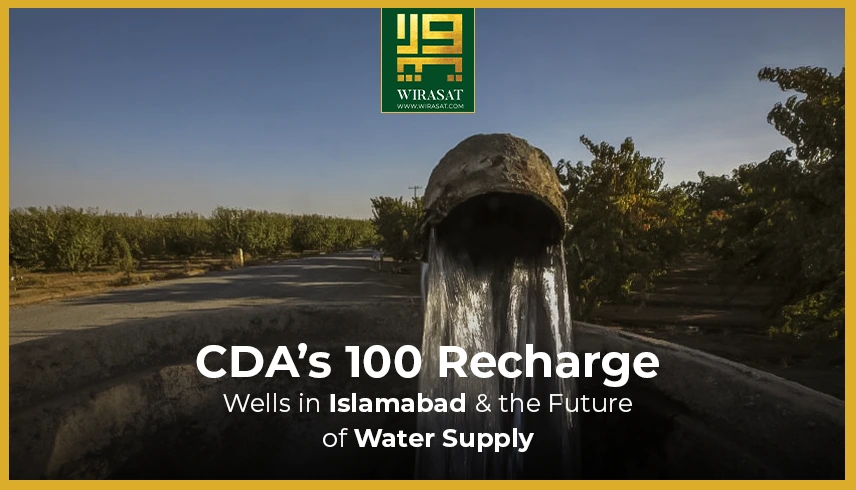
Water is life, and water insecurity is on the rise among the residents of Islamabad. The fast urbanization, climate change, and population growth exert tremendous strain on natural resources. The initiative of CDA 100 recharge wells in Islamabad is a positive move in the right direction, in response.
This project indicates a greater dedication towards the preservation of groundwater and the provision of water on a long-term basis. It also highlights the need to address the Islamabad water crisis before it is too late.
The Islamabad Water Crisis
The Islamabad water crisis is a silent supposition that is several years old. The increasing demand, unauthorized borewells and reduced rainfall have drastically reduced groundwater levels. Most residential places already experience a shortage, particularly during summers.
Additionally, climate change has changed the rainfalls and natural recharges no longer match the consumption. This imbalance leaves residents worried about the future of the availability of water.
The city might run out of serious shortages in decades without intervention. Sustainability and survival require proactive solutions.
How will 100 Recharge Wells of CDA will end the Water Crisis in Islamabad?
The concept of recharge wells is also a familiar instrument of sustainable urban planning, which has not been fully implemented in previous policies in Islamabad. Such wells trap rain water and stormwater, which seep into the ground, refilling exhausted aquifers.
The new project is that of CDA 100 Recharge Wells. The wells are 15 feet across and 25 feet deep, and are located strategically to optimize the amount of rainwater collected, particularly in flood-prone and high-runoff zones.
Boost Groundwater Levels:
Recharge wells enhance the amount of groundwater available by enabling rainwater and runoffs to trickle into the ground, lifting up the water table.
Reduce Over-Extraction Impact: Recharge wells decrease the cases of over-extraction of groundwater, which reduces the pressure on boreholes and wells, thus preventing further groundwater depletion.
Prevent Urban Flooding:
Recharge wells will avoid flooding in cities by absorbing too much rainwater during heavy rainfall, thereby minimising surface runoff and losses through flooding.
Improve Water Quality:
Recharge wells enhance water quality; since the water passes through soil layers, pollutants are filtered away naturally, creating clean groundwater.
Support Sustainable Water Supply:
Recharge wells facilitate healthy water supply by increasing groundwater recharge, which serves domestic, commercial, and agricultural consumers.
Recharge Wells in Islamabad
Recharge wells receive rainwater on the roads, roofs and open areas. The water goes through filtration layers and gets into underground aquifers, eliminating debris and pollutants. The wells serve as artificial recharge sources, which speed up natural replenishment overrun by urban developments.
The power of change with simple technology is usually ignored by residents. Recharge wells offer a cheap, efficient way of dealing with water shortages.
Why Does Groundwater Recharge in Islamabad Matter?
Recharge in groundwater is also important since ground water sources provide a significant part of the city water. The decreasing levels lead to drying up of wells, increase pumping expenses and lower water quality.
The recharge wells provide the balance where rainwater runoff is trapped and the city does not drain the water but rather retains it underground.
Water Projects of the Capital Development Authority
The water projects by the Capital Development Authority extend beyond the recharge wells. People are working on various solutions to enhance water infrastructure.
These are pipeline development, reservoir cleanup, new storage and advanced monitoring systems which monitor consumption and leakages. These projects reflect a long-term perspective. They are seeking to ensure the future of water in Islamabad by diversifying the methods instead of a single solution.
CDA Water Management Plan
The CDA water management plan balances between supply and demand. It covers ground water monitoring, promotion of rainwater harvesting, and modernization of infrastructure.
Community awareness is also emphasised in the plan. The people are critical in conservation of water and the proper use reduces strain on natural resources. It is necessary to be emotionally attached to conservation. By understanding the impacts of waste, people become sustainability partners.
CDA Water Tanks Program
The CDA water tanks project can be used with recharge wells to increase storage capacity within Islamabad. Tanks of water are used to control changes in seasonal supplies.
The stored water may also be used during the dry seasons as the rains fall, limiting groundwater extraction. Infrastructure, such as storage infrastructure, offers resilience, meaning that water will be available even in the case of sudden shortages or droughts.
Islamabad Water Infrastructure Projects
Islamabad is in the process of modernizing its water system, and it has various infrastructure projects such as pipeline replacements, plants to filter water, and smart monitoring systems.
The development of cities requires improvements of infrastructure. Shortages can be aggravated by leaks and ineffectiveness without modernization. Water quality is also enhanced by infrastructure investment. High quality and clean supply promotes health and life of the population.
Sustainable Water management Pakistan
The success of Islamabad can affect sustainable water management in Pakistan. Population growth and climate change are common in many cities.
Smart infrastructure, rainwater harvesting, and recharge wells can be duplicated all over the country. The government needs to encourage sustainable practices through laws and policies.
Water security is not a city problem, but a national one, which influences economic stability, agriculture, and the health of the population. Innovation and a strong desire are the keys to the future of water supply in Islamabad. Recharge wells are not the end; they are just the beginning. Sustainability requires communal coordination and planning.
The problem of climate will keep evolving. Thus, we have to embrace a dynamic approach in order to protect water resources. Islamabad can emerge as an example of sustainable water management. The city can become a source of inspiration in other parts of Pakistan.
Conclusion
The 100 recharge wells built by CDA can be viewed as a symbol of hope in the face of an ever-increasing environmental crisis. They are proactive leaders and committed to the future generation.
The water crisis in Islamabad requires collaboration between the government and the people. The city can achieve its water future through groundwater recharge, infrastructure development, and sustainable practices.
Water is not just a resource, it is life, security and peace of mind. Sustainable water management in Pakistan is a good investment in our future and the aspirations of our future generations.